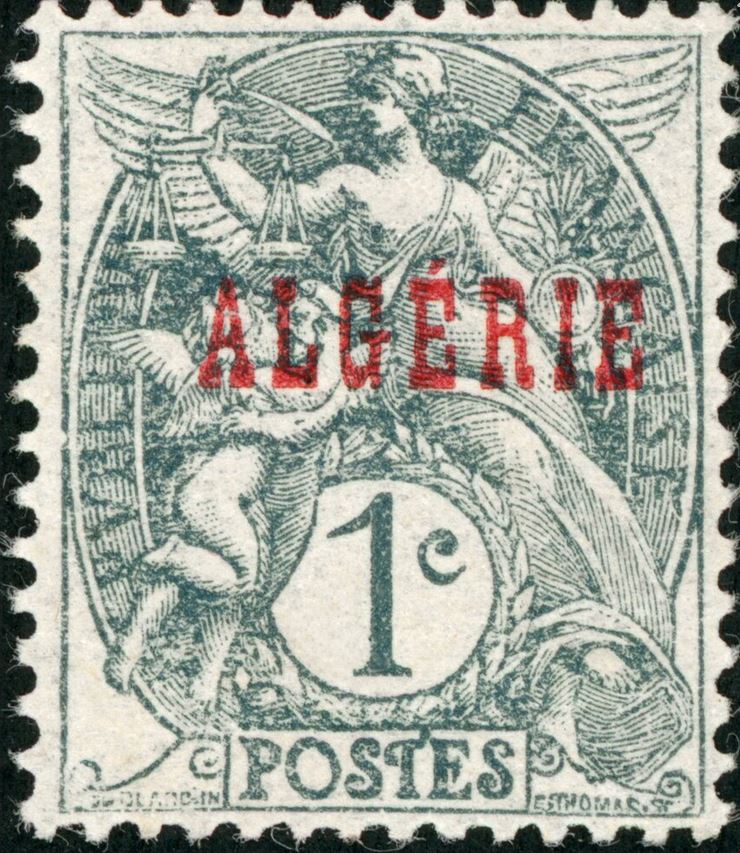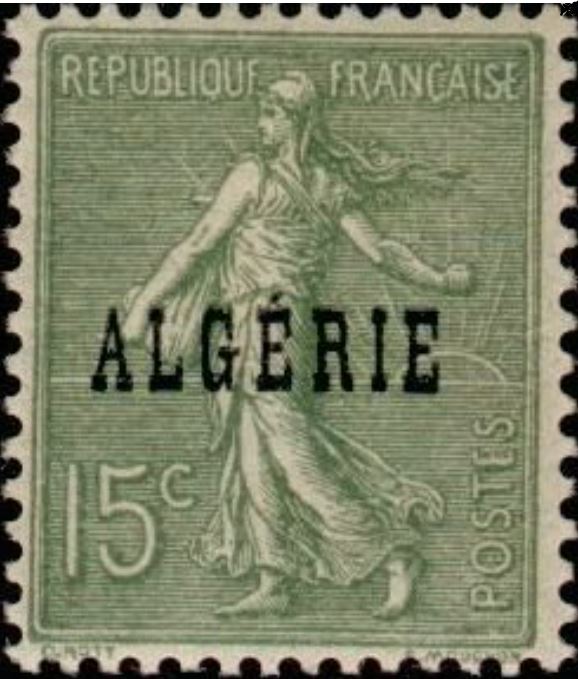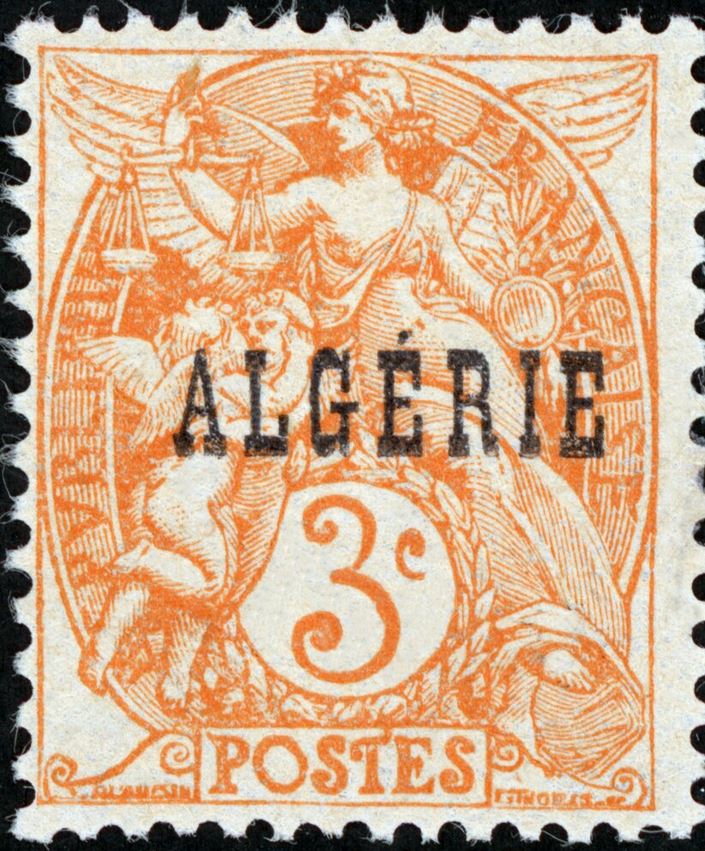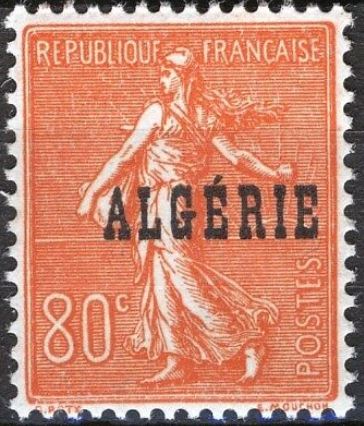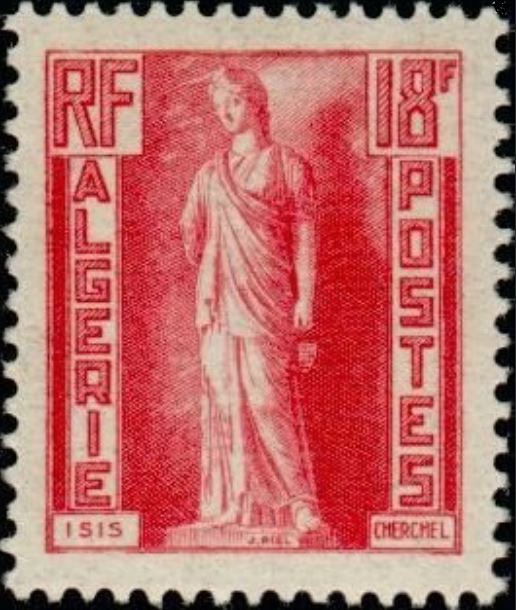
Isis of Cherchell
Michel Reference
DZ 302
Stanley Reference
DZ 311
Yvert Reference
DZ 291
Scott Reference
DZ 243
Themes
Angels and Mythology
Description
Cherchell is built on the site of lol-Caesarea, the ancient capital of Mauritania, and occupies the central part of the ancient Greco-Roman city which measured no less than four hundred hectares in area.
The city is located on the shore. According to the spirit and tradition of the Phoenicians and Greeks.
Attracted by the beauty of these coasts and the fertility of the soil, the rugged sailors of Phoenicia sailed their triremes into these waters. In the 4th century BC, they founded a modest colony which they named Iol after a Phoenician god. They established their port behind an islet very close to the land.
Following the destruction of Carthage in 146 BC, the Republic brought Africa Vetus, a province which covered the north-east of present-day Tunisia, under the domination of Rome. The rest of the country had been left to the kings of Berberia over whom the Roman Republic exercised a sort of protectorate. Some of these kings reigned in peace. Others, like Jugurtha or Juba I, threw off the yoke.
Juba I, king of Numidia, had to stab himself to avoid falling into the hands of Caesar, the day after the battle of Thapsus which marked the definitive defeat of Pompey's supporters.
This victory caused Numidia to fall into the hands of Caesar as far as Wadi El-Kébir. Rome thus created a new province adjacent to Africa Vetus. This province, Africa Nova, included Bône, Djemila, Lambèse and Constantine.
The only region which was not yet directly subject to Rome, the mountainous region of Djurdjura, Ouarsenis, Rif, had been the prerogative of a Berber king, Bocchus, father-in-law of Jugurtha, to whom Julius Caesar had granted the region of Setif.
To be at the center of his states, Bocchus chose as his residence the pretty site of Iol, promoted to the dignity of capital, and which thus experienced its first magnificence.
The Bocchus family having died out, Augustus made Iol the capital of the kingdom of Mauretania which included with Morocco the part of Algeria which corresponds to the region of Oran, that of Algiers and part of that of Constantine, that is to say three quarters of present-day Northern Algeria.
The late Juba 1st had a son. Juba II was a genius builder, founder of Caesarea, and the civilizing influence he was able to exert on its inhabitants. The personality of Juba II was almost completely incorporated into this city which he embellished during a reign of more than fifty years. More than by all that is said about him, Caesarea emerging from the past, grateful, will henceforth ensure the perpetuity of his name.
In the field of the Arts, his work was considerable. A whole host of artists, among the most famous in Rome and Greece, responded to the call of the Berber sovereign: architects, sculptors, painters, mosaicists.
The quarries near Chenoua were actively exploited by a local workforce. The brocatelles, the white or purple breccias, collapsed with a crash under the quarrymen's peak.
The city is located on the shore. According to the spirit and tradition of the Phoenicians and Greeks.
Attracted by the beauty of these coasts and the fertility of the soil, the rugged sailors of Phoenicia sailed their triremes into these waters. In the 4th century BC, they founded a modest colony which they named Iol after a Phoenician god. They established their port behind an islet very close to the land.
Following the destruction of Carthage in 146 BC, the Republic brought Africa Vetus, a province which covered the north-east of present-day Tunisia, under the domination of Rome. The rest of the country had been left to the kings of Berberia over whom the Roman Republic exercised a sort of protectorate. Some of these kings reigned in peace. Others, like Jugurtha or Juba I, threw off the yoke.
Juba I, king of Numidia, had to stab himself to avoid falling into the hands of Caesar, the day after the battle of Thapsus which marked the definitive defeat of Pompey's supporters.
This victory caused Numidia to fall into the hands of Caesar as far as Wadi El-Kébir. Rome thus created a new province adjacent to Africa Vetus. This province, Africa Nova, included Bône, Djemila, Lambèse and Constantine.
The only region which was not yet directly subject to Rome, the mountainous region of Djurdjura, Ouarsenis, Rif, had been the prerogative of a Berber king, Bocchus, father-in-law of Jugurtha, to whom Julius Caesar had granted the region of Setif.
To be at the center of his states, Bocchus chose as his residence the pretty site of Iol, promoted to the dignity of capital, and which thus experienced its first magnificence.
The Bocchus family having died out, Augustus made Iol the capital of the kingdom of Mauretania which included with Morocco the part of Algeria which corresponds to the region of Oran, that of Algiers and part of that of Constantine, that is to say three quarters of present-day Northern Algeria.
The late Juba 1st had a son. Juba II was a genius builder, founder of Caesarea, and the civilizing influence he was able to exert on its inhabitants. The personality of Juba II was almost completely incorporated into this city which he embellished during a reign of more than fifty years. More than by all that is said about him, Caesarea emerging from the past, grateful, will henceforth ensure the perpetuity of his name.
In the field of the Arts, his work was considerable. A whole host of artists, among the most famous in Rome and Greece, responded to the call of the Berber sovereign: architects, sculptors, painters, mosaicists.
The quarries near Chenoua were actively exploited by a local workforce. The brocatelles, the white or purple breccias, collapsed with a crash under the quarrymen's peak.
Colors
Rose carmin
Designer
Jules Piel
Perforation
14 x 13
Printing
Taille-douce
Face value
18,00 DA
Mint Value ($)
—
Used Value ($)
—
Gérer ce timbre
Connectez-vous
ou créez un compte pour ajouter ce timbre à votre collection !
Cette page a été vue 489 fois